KV Challan Shutdown: How Schools Can Go Fully Digital Now
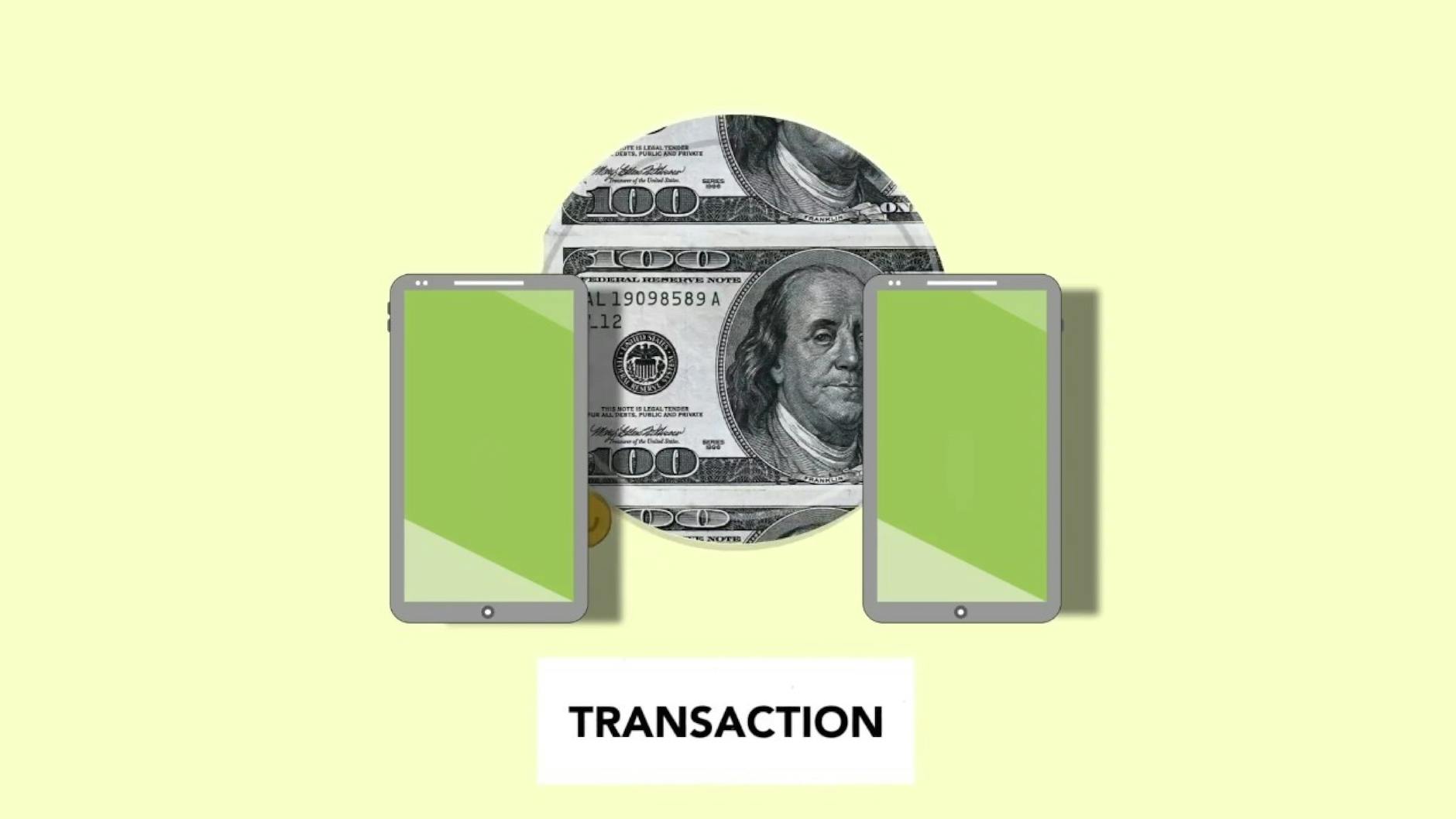
The Challan Era Is Over — Is Your School Ready?
In August 2026, Kendriya Vidyalaya Sangathan (HQ) issued a formal order discontinuing fee payment through challan at Union Bank of India counters. For lakhs of KV parents, the offline queue at the bank branch is now history. For school administrators watching this news, the message is unmistakable: the government itself is pushing education fee collection fully online.
If a 1,200-school national network like KVS can make this transition, your school, junior college, or coaching centre has every reason — and every tool — to do the same. The question is not whether to go digital. It is how to do it without disrupting collections, confusing parents, or overloading your staff.
This guide walks you through exactly that.
Why the Challan Model Was Always a Problem
The bank challan system survived for decades not because it was good, but because nothing better was widely available. Let us be honest about what it actually cost your institute:
- Long queues and lost time: Parents took half a day off work to visit a bank branch, stand in line, and return a stamped copy to school — all for a single fee payment.
- Manual data entry errors: Cashiers and admin staff re-entered challan details by hand, creating mismatches that took days to reconcile.
- Delayed confirmation: Banks batch-processed challans overnight or over weekends, leaving your accounts team in the dark about who had actually paid.
- No digital trail: Lost or damaged challans meant disputes with parents that dragged on for weeks.
- Impossible to scale: As your institute grew, challan-based collection became a bottleneck, not a process.
The KVS order is simply the formal acknowledgement of what finance teams have known for years: challans are a liability, not a system.
What a Fully Digital Fee System Looks Like in Practice
Moving away from challans does not mean chaos. It means replacing a slow, error-prone process with a fast, transparent one. Here is what the day-to-day looks like when your institute goes fully digital:
1. Parents Pay Anytime, From Anywhere
A parent in a late-night shift does not need to visit a bank. A parent in a small town does not need to travel 20 kilometres to a branch. With digital fee collection, they open a link — on WhatsApp, SMS, or email — enter their child's details, and pay via UPI, credit card, debit card, or net banking. The entire process takes under three minutes.
2. Receipts Are Instant and Automatic
The moment a payment clears, an official fee receipt is generated and delivered directly to the parent's phone — via WhatsApp, SMS, or email. No more printing, no more manual receipt books, no more lost paper slips. Parents have a permanent digital record they can access anytime.
3. Your Dashboard Updates in Real Time
Your accounts staff no longer waits for end-of-day bank statements. Every payment reflects on the fee management dashboard the instant it is made. You can see exactly who has paid, who has not, and how much revenue has come in — by class, branch, or fee head — at any moment.
4. Reconciliation Takes Minutes, Not Days
Because every payment is tagged to a student ID and fee head automatically, month-end reconciliation goes from a two-day exercise to a ten-minute review. There is no manual matching of challan stubs to ledger entries.
5. Defaulters Are Managed Politely and Automatically
Automated reminders go out to parents with outstanding dues — before the due date, on the due date, and after it — without anyone on your staff making a single phone call. This reduces awkward conversations and improves collection rates significantly.
The Common Fears — and Why They Do Not Hold Up
Every administrator has the same three worries when going digital. Here is the honest answer to each:
"Our parents are not tech-savvy enough."
If your parents can use WhatsApp — and nearly all of them can — they can pay fees digitally. UPI is now the default payment method for hundreds of millions of Indians. A payment link on WhatsApp is far simpler than visiting a bank branch with the correct challan form.
"Our internet connection is unreliable."
Digital fee collection does not require your school's internet to be online at all times. Parents pay from their own phones, on their own networks. Your dashboard syncs when connectivity is available. The payment infrastructure runs on the payment provider's servers, not yours.
"Setup will take weeks and need IT staff."
Modern fee collection platforms are built for non-technical users. A school can configure its complete fee structure — multiple classes, multiple fee heads, different due dates — and go live within a single working day. No hardware, no server installation, no dedicated IT team required.
A Practical Transition Checklist for Your Institute
If you are ready to make the shift, work through these steps in order:
- Map your fee structure: List every fee head — tuition, transport, library, lab, activity — for every class or batch. This becomes the foundation of your digital system.
- Upload your student database: Most platforms accept a simple Excel file with student names, class, section, and contact details.
- Set payment due dates and late fee rules: Configure these once; the system applies them automatically every term or month.
- Communicate the change to parents: Send a single WhatsApp broadcast explaining the new process, why it benefits them, and who to contact with questions. Keep it short and friendly.
- Run a pilot with one class or batch: Go live with a smaller group first, resolve any questions, then roll out to the entire institute.
- Train your accounts staff on the dashboard: Most platforms offer a simple walkthrough. Your team will typically be comfortable within a single session.
What This Means for Compliance and Audits
Beyond convenience, digital fee collection has a significant compliance advantage. Every transaction carries a timestamp, a payment reference number, and a student ID. If a parent disputes a payment — or a regulatory body asks for fee records — you can produce a complete, tamper-proof history in seconds. This is increasingly important as state governments and bodies like CBSE push for greater fee transparency and accountability.
The KVS challan discontinuation is part of a broader national shift. Institutes that build clean, auditable digital fee records now will be far better positioned when stricter compliance requirements arrive — and they will.
The Right Time to Make the Move Is Now
The new academic year is already underway. Waiting for the next term or the next year means another cycle of manual reconciliation, lost challans, and frustrated parents. The good news is that switching does not require a school holiday or a project team. It requires a decision and a single day of setup.
If KVS can retire the challan for its entire national network, your institute can certainly do the same — and do it faster, with a solution built specifically for Indian educational institutions of every size.
Ready to move beyond the challan for good? PayMyFees helps Indian schools, colleges, and coaching centres go fully digital in one day — with UPI, cards, automated WhatsApp receipts, and real-time reconciliation built in from day one.
Frequently Asked Questions
Here's what you need to know about PayMyFees, based on the questions we get asked the most.
We follow a 'T + 2' settlement cycle, meaning the payment will be settled into your bank account in 2 working days from the successful transaction date. This is the same bank account details of which were provided in your KYC documents.
Generally an identity proof with photograph and an address proof are the two basic mandatory KYC documents that are required to establish one's identity.
For KYC, one needs to upload copies of PAN Card, Aadhar Card & a Cancelled Cheque (without signature).
The objective of KYC guidelines is to prevent businesses from being used by criminal elements for money laundering activities. It also enables businesses to understand their customers, their financial dealings so as to serve them better and manage its risks prudently.
For KYC, one needs to upload copies of PAN Card, Aadhar Card & a Cancelled Cheque (without signature). If someone does not upload the KYC documents, settlements to the partner Institute will not happen & shall be withheld. To start settlements to your bank account, we need your bank account details & your PAN details.
Students can be added one-by-one or imported from an Excel file. Format of the Excel file can be found in the panel itself.
Unlimited. There is no limit on the number of students you can add or import.
Students will receive an SMS with their login details on their mobile phones immediately after their account is created in the system - either when you import student details in to the system or when you create their account individually.
Unlimited. There is no limit on the number of Courses, Programs or Batches you can create.
No. You can copy the fees structure & rename it as per your needs. You can also modify, add or remove fee heads if needed in the copied fees structure.
PayMyFee supports & accepts payments from all major Credit & Debit Cards (VISA, MasterCard, RuPay, AMEX, Diners), Internet Banking (All major Indian Banks), Mobile Wallets (Paytm, Mobikwik, JioMoney, etc.), UPI & Prepaid Cards. PayMyFee also supports acceptance of International payments.
As a payment aggregator partner, PayMyFees is required under RBI (Reserve Bank of India) guidelines to complete KYC (Know Your Customer) and AML (Anti-Money Laundering) verification for every institute before enabling live payment collection. This protects your institute, your students, and the payment ecosystem from fraud and ensures your settlements are processed without interruption. We collect two categories of documents:
Authorized Signatory's Documents — to verify the identity of the person authorized to operate the account on behalf of the institute (Aadhar Card, PAN Card).
Institute's Documents — to verify the legal existence and banking details of the institute itself (PAN Card, Cancelled Cheque, Registration Proof, GST Certificate/Non-Enrollment Declaration, Authorization Letter or Board Resolution, and a UBO Declaration where applicable).
All documents are stored securely and used solely for verification purposes. Once verified, your account is activated and you can start accepting payments immediately.
From the PayMyFees Blog
Some quick reads from our official blog. Handpicked for you.

Fee Transparency Compliance: How Schools Can Win Parent...
Continue Reading

NOC Renewals Go Online: How Schools Can Stay Compliant
Continue Reading

How Schools Can Fix Broken Fee Portals Before Staff Burn Out...
Continue Reading
Faster growth starts with PayMyFees
Join over 300,000+ users who have already used our services.